Sweetgrass
Richness at
all levels for your health
|
|
|
| |
|
|
| |
|
 Many
years ago I advised the people in Turkey and
India, to chew grass in cases of starvation-
and spit out the pulp again. In school we
had learned that the pulp is only digestible
for cows and their four stomachs system and
the ruminating (rumen, reticulum, omasum,
abomasum), but not for humans.
Last
year (2012) I met the herbalist Bruno Weihs
Brodt from Austria, who maintains a large
self-sufficient garden and has also made many
self-experiments. He explained that he had
made the greatest discovery of his life: grass
was not only drinkable by making juice of
it, but also edible, if you take the fresh,
young grass.
 At
first, he
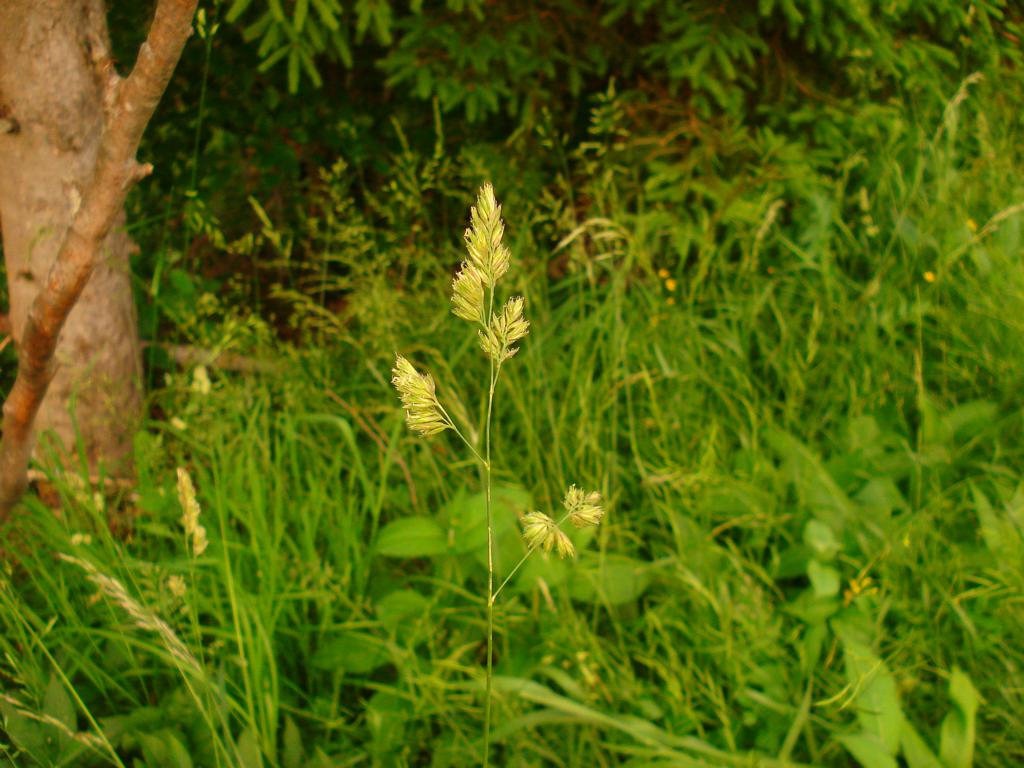
suggested orchard grass (see the foto
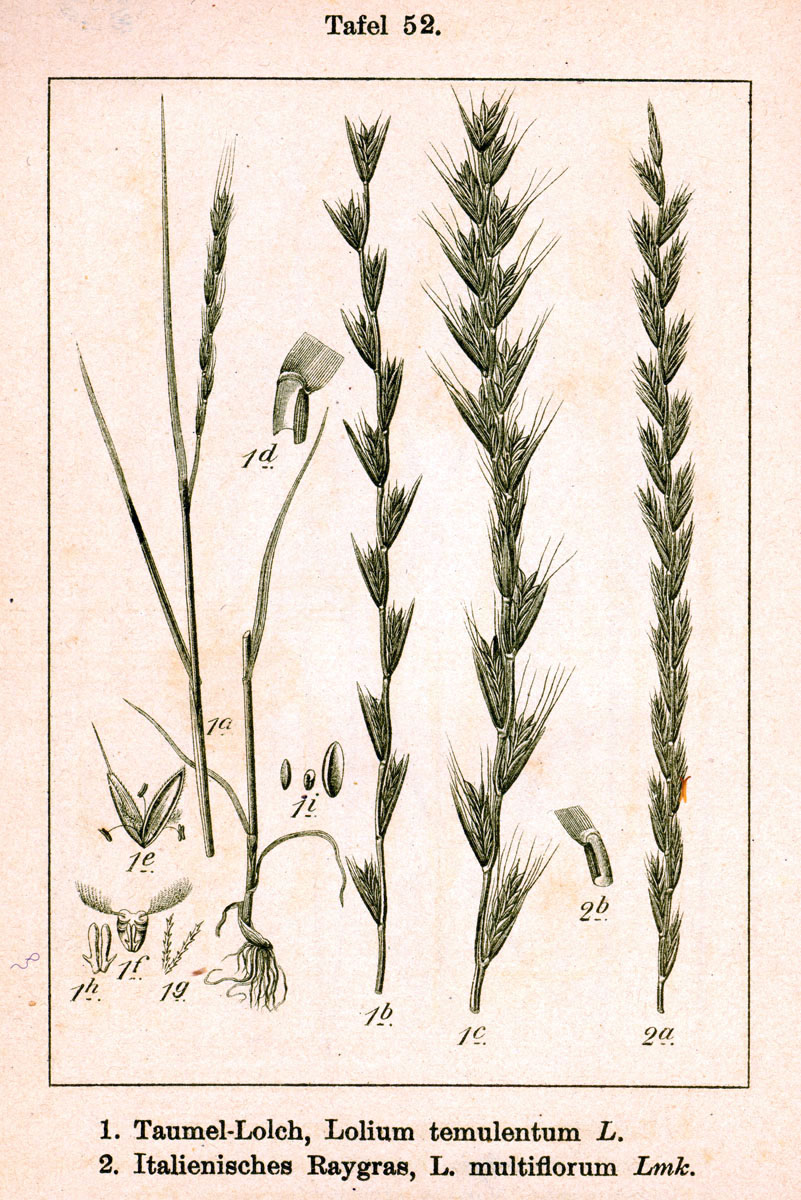
left). Later on he changed to buy the "italian
ryegras (lolium
multiflorum) - also called
westerwold . Generally the sweetgrass is used
as a forage plant. I wanted to try this type,
too. But then I found, that this commercial
type of ryegrass is only a short-lived, non-flowering
grass (non-fertile). Therefore,
it was out of the question.
I also begun testing sweetgrass types like
orchard grass (dactylis
glomerata) and various other sweet
grasses - such as quaking - as well as sea
rush (scripus)
- or moor-rush (juncus
trifidus). I found all grasses
digestible, that I had tried previously (identifying
here),
whereas I noticed
the instinct lock while
drinking the sea rush and moor-rush juices.
As an experiment I drank 1 liter of sea rush
at once during my stroll through a forest..
I could not find any discomfort of any kind.
But I tasted some bitter ingredients and got
a clear inner "stop"feeling, which
meant that I did not go on with the experiment.
However, I find the seedpods
taste of the sea rush - as well as of the
three leaf rush very delicious
- and my body agrees with that. I can eat
the amount that fits into the hollow of one
hand. I have not tried more. It tastes like
wheat cereals. This cereals are not cultured
and poisoned with fertilizer. I guess, that
it also does not contain too much - or no
gluten at all, because after eating it, I
have no afflictions with hayfever (pollenosis),
asthma, or neurodermatitis (atopic eczema).
But
here it is also very important:
please try everything byyourself and in small
quantities, before you start to eat larger
amounts of any wild plant - or drink as juice
- or even tell others, that it is eatable
/drinkable.!
 .
Sweetgrass is already wellknown from health
stores, wholefood shops and wellness oases
and spa: wheatgrass and barleygrass. But this
costs a small fortune, whereas mother natures
gifts cost nothing at all! You can fetch all
the abundance of the ingredients from the
forest, fields and meadows! Sweetgrass in
it's natural state contains an interaction
(synergy) of well applicable goodnesses, like
biol. chlorophyll
(stored light), vitamins
(vital substances), minerals,
and trace elements,
and amino acids
(protein components),
mono-unsaturated fats, enzymes
(implements for the breaking down of the ingredients),
as well as natural fiber
and cellulose portions (for the
cleansing of the intestines) in high density.
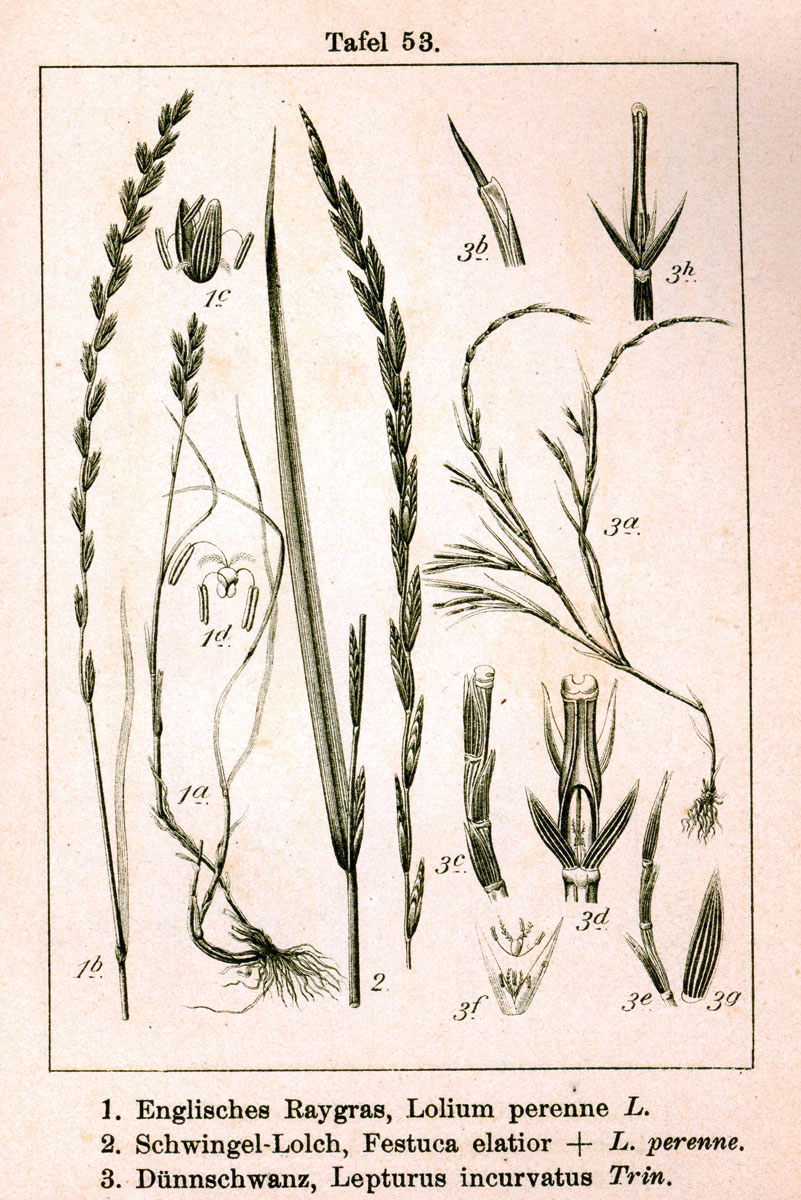
The sweetgrasses (poaceae = gramineae) are
a worldwide widespread plant family - in all
climatic zones, which are marked by the typical
grasslike shape of the related types.
All
cereals like wheat, rye, barley, oats, millet,
maize and rice are among the group of plants
of sweet grasses. Today they build the basis
for feeding the world's population in the
form of cash crops or for livestock feed;
But they are so very overbred and made infertile
as a one-year hybrid, that it would be really
wise to prefer the fresh grasses from nature.
As grass and grassland they shape the landscapes
in many parts of the world with meadows, pastures,
savannas and steppes. There are approximately
10.000 species of sweetgrass with more than
650 genera. Thus, they are one of the largest
families within the flowering plants.
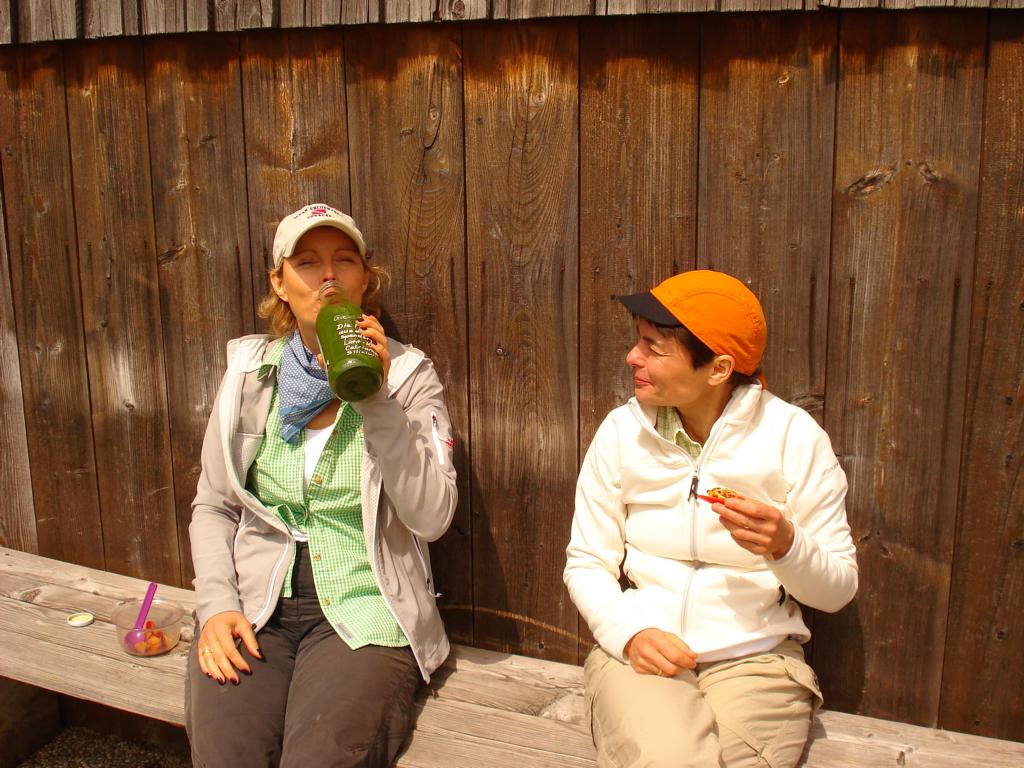
Also
on the mountain tours I felt the tremendous
impact of my Sweet Grass Juice, which I now
call my "Power Vital sweet grass
juice". Whenever I had not spared
the trouble, to pick grass, to cut it and
to make juice, I really had the power of a
bear. Then I always raced away - much faster
than the others! We have also made a nice
video clip, that you can check out here:.
|
|
|
| |
|
Video
- sweetgrass juice at alpine hiking
of
course - the faces that we draw here,
of course, are not real ...
|
|
|
| |
|
Video - sweetgrass juice at a veggie-strolling
the
grassjuice part - at
minute 0:50
|
|
|
|
As soon there is grass after wintertime -
and as long there is green grass in spring,
summer, harvest, and winter - even under the
snow, I collect a bundle grass - four
times a week - in
the morning or evening or during my mountain
hikes. I prepare the grass as seen on the
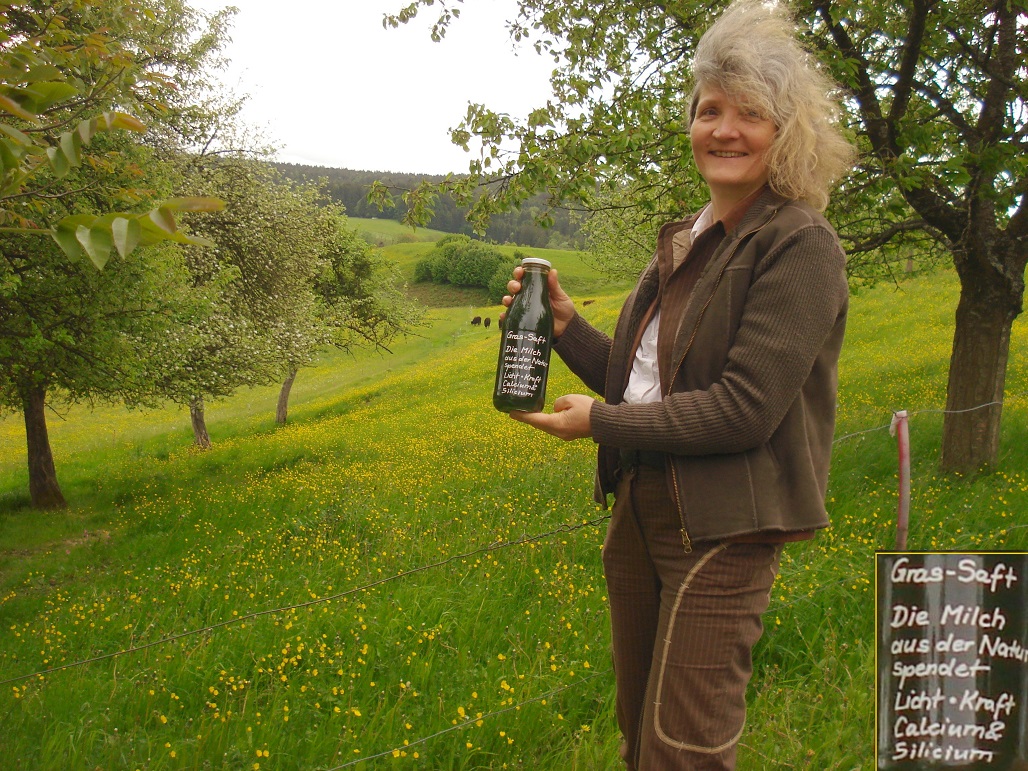
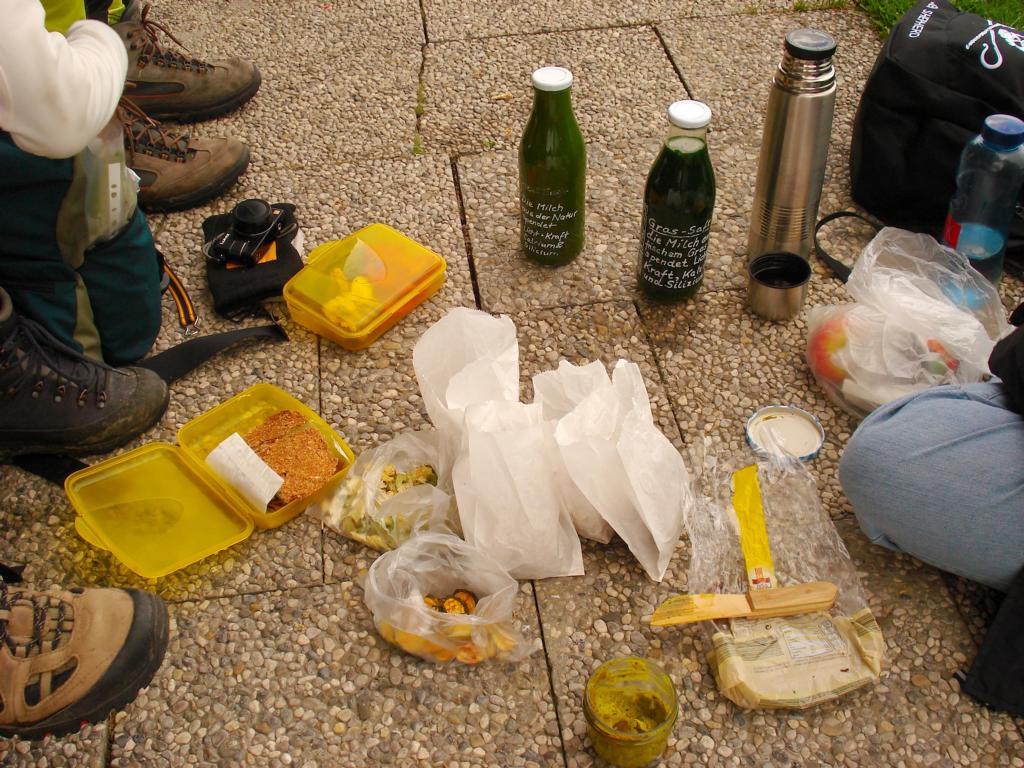
fotos below. We also take the grass-juice
with us in the mountains. It provides us with
incredible vital power. We can feel this especially
hiking in the mountains. When I drink that
grassjuice in the morning, instead of eating
a banana - or drink it on my way - then I
zoom off like a steam locomotive. I myself
take all grasses, which I can get at the moment,
that make me feel good. Bruno Weihsbrodt -
the austrian herbal expert - suggests, to
take only sweetgrass, because some types of
gras can also contain substances, which are
incompatible for our organic metabolism. I
for my part prefer to feel from inside. I
try the grass, which catches my eye - if my
intuition says "yes", I try it!
Regina: "Vroni, what do you say?"
Vroni: "Yes indeed! I absolutely agree
with you" 
So for example in 2012 I took 2 liters of
freshly squeezed grass juice on a 5-day mountain
tour in "Königssee, Berchtesgaden".
The result was stunning: I dragged the 24kg
backpack (usually I carry only 8 kg) up to
the really steep "Rötbachsteig"
(mountain path) - from "Untersee"
(a mountain see) to the "Wasseralm"
(an alpine hut). And from there to the "Kärlinger
house" with comparatively great ease
- and had no aching muscles!
I
wish you much joy and many interesting findings
while trying and making your own experiments!
Regina
|
|
|
|
|
|
o
o
|
|
o |
|
|
 |
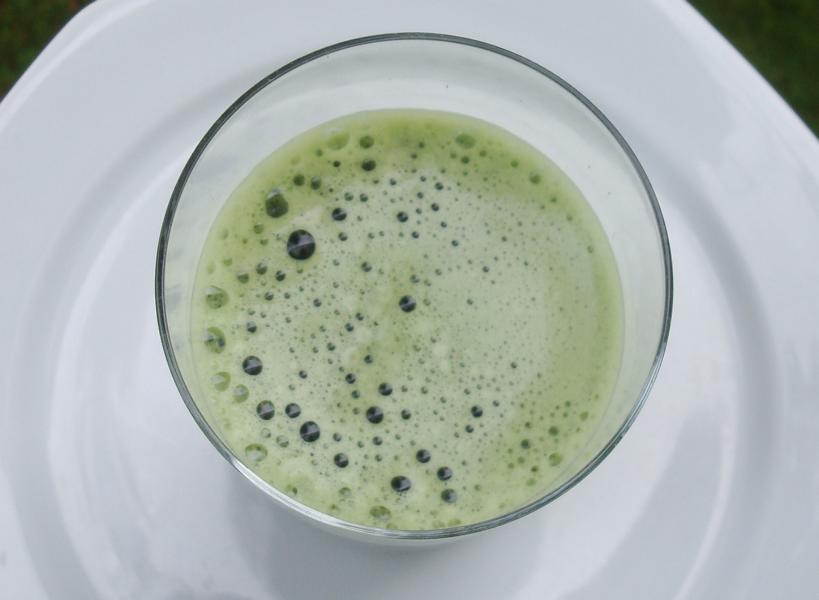
Grass
juice of orchard grass (sweet
grass)
In the glass right: is the same
juice with almond milk:
I previously mashed the almonds
with some water.
|
|
Grass
juice from a different type of
grass.
This one's color shines slightly
more!
|
|
|
|
|
For
the preparation of sweetgrass juice
you do not need expensive machines
- see below! If you would like to drink
the juice like coffee with milk, then
first put a few almonds (3-5) with 1
cup of water into the blender and puree
this, until it becomes like milk. Of
course, soaked almonds are all the better!
By the way:
In the year 1995, when I
stayed in the "Schwarzwaldklinik"
(a raw food clinic until 1996 in "Schwarzwald"/
Black Forest) there was still no power
mixer. But despite of that, they made
already almond milk, purees and creams
- using the normal kitchen equipment!
Sweet
grass from the meadow, from the forest
or from the field - provides you with
real power: it also helped my sister
Vroni and me to go hiking in the mountains
again with full force - after so many
years of little movement !
|
|
Preparation Of Sweetgrass
|
|
|
|
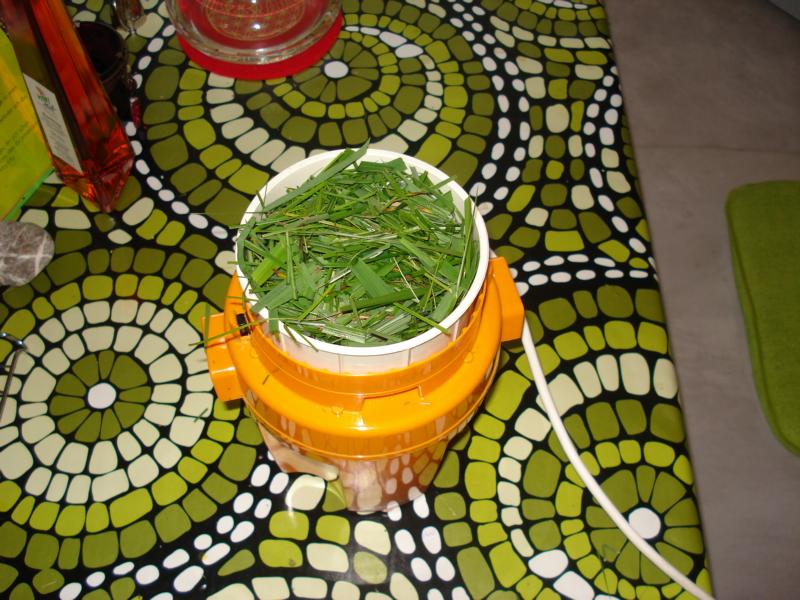
Here
the preparation with the Moulinette
Cruncher (or possibly to with
a hand blender). For those who
have no power mixer It is enough
if you have one of them. When
you use a hand blender: before
juicing, be shure, you cut the
the grass as short as possible
and prepare the juice in small
quantities!
|
|
|
|
|
|
|
|
|
|
b_o.jpg) |
of
course you can also work with
a power mixer ... but this version
is also very quick:
Grass juice preparation in a
simple way - with simple kitchen
equipment!
|
Here
the preparation with the Power
Mixer.
Since December 2014 I'll blend
and preparate my gourmet raw
food creations with the high
performance blender "BIANCO"
(purple mixer in the photo).
It mashes and makes puree very
fine. I must not sieve the Sweetgrass
and herbs more than one time
after mashing. Smoothies, soups,
cremes and ice are more fine.
|
|
|
|
|
|
|
|
|
|
|
|
|
|
|
|
|
|
|
|
|
|
leftover
pomace comes on the compost heap!
|
 |
|
 |
|
_o.jpg) |
|
|
|
Preparation of fresh
Sweetgrass Juice
Take
your sweetgrass from a slurry free and
fertilizer free meadow. It also should
be free of dog dirt, exhaust gases and
chemicals. For one glass of sweetgrass
- enough for one person - you will need
a thick handful of grass - about 8 to
12 inches long (if you have grass with
only 4 inches length you need the double
or threefould amount of grass ! Cut
it at home with a large scissor into
0,4 inches long pieces (Photo
1). Using a scissor is much
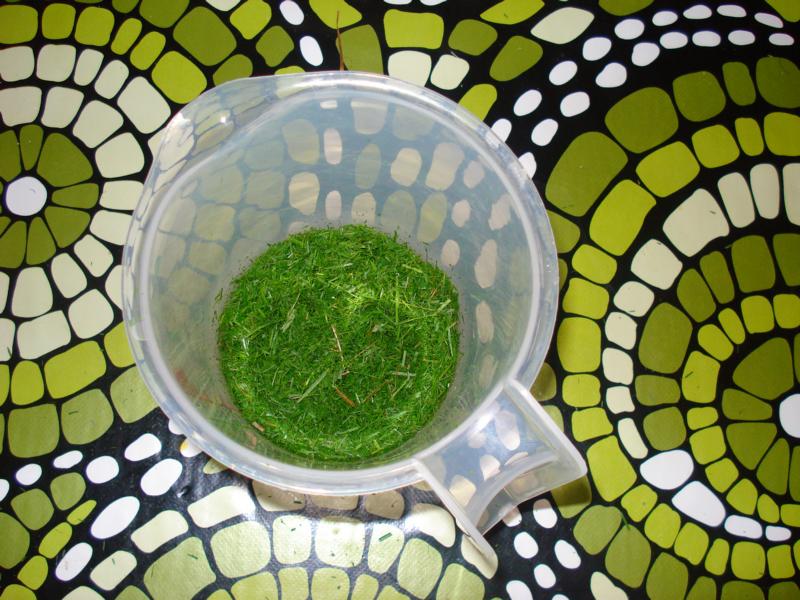
easier than using a knife! Shred it
carefully (Photo
2). Put those shredded
fibres into a shaker (photo
3), add 1 or 2 glasses of
water (two, if you wish to drink more
- or if somebody else likes to enjoy
drinking with you ).
Mix it carefully with an immersion blender
(1/2 minute). You can also shake it
in a closed glass. Take care, that the
shaker won't open while shaking. You
have to shake it really strong (about
1 minute).
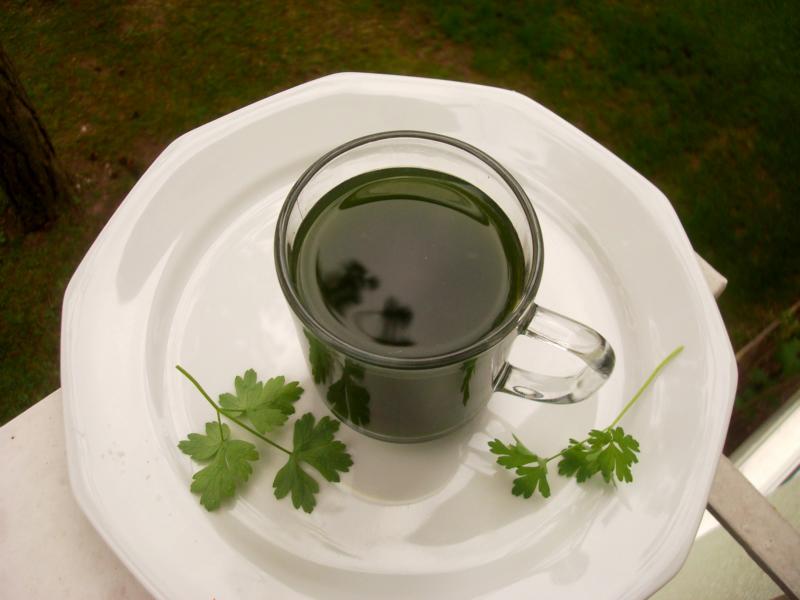
Now your grass juice is ready to drink.
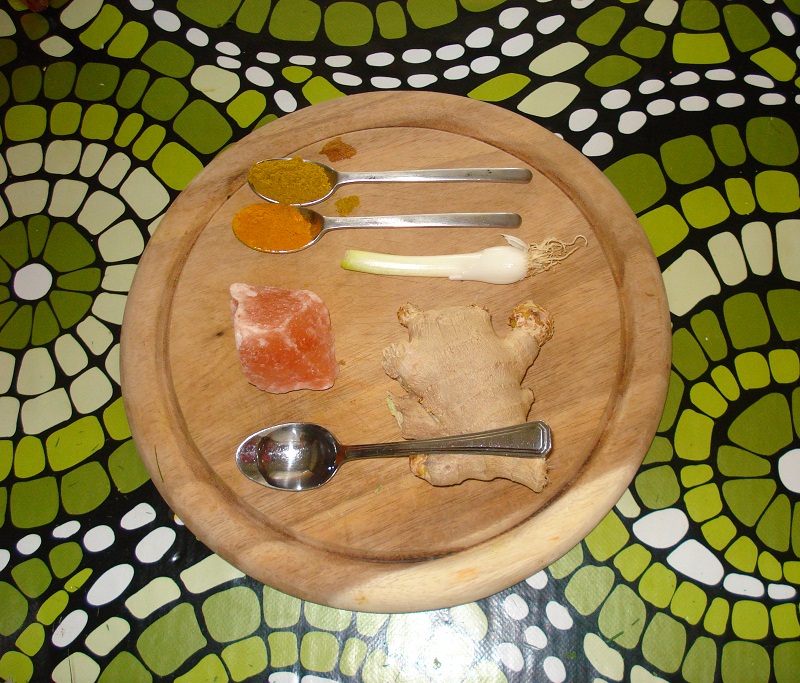
You can add some spices, of course -
also some spring onion and crystal Salt
Sole (brine - Halite-Himalayan salt)
(photo 4).
I personally prefer to drink the grassjuice
pure.
If
you have a power blender, you can mix
the grass (roughly chopped into 0,4
to 0,8 inch pieces) and the water all
together. If you wish to put spices
or salt-sole, you can mix the sweetgrass
and water together with the spices.
Enjoy
your grassjuice! ¸.•*´¨`*•.¸¸.•*´¨`*•.¸¸.•*´¨`*•.¸¸.•*´¨`*•.¸¸.•*´¨`*•.¸¸.•*´¨`*•.¸_¸.•*¨`*•.¸¸.•*´¨`*•.¸¸.•*´¨`*•.¸¸.•*´¨`*•.¸
|
| |
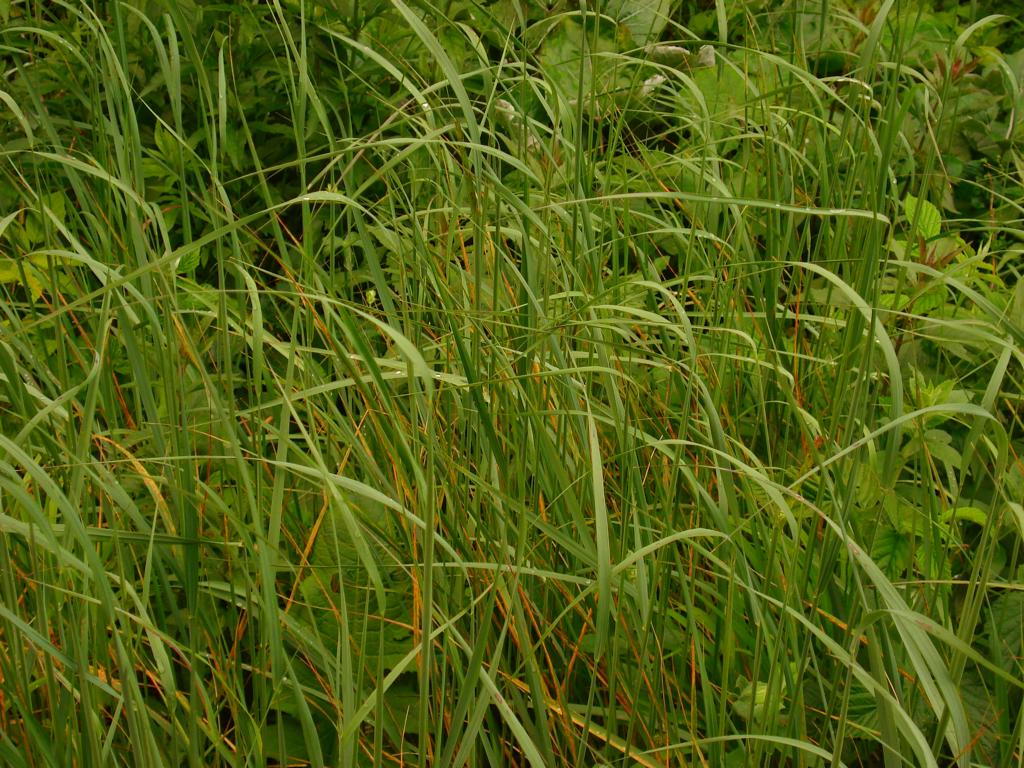
Identifying
characteristics
|
|
here the cocksfoot
Fotos:
Regina F. Rau
|
The Sweet Grass with approximately
10,000 species in over 650 genera
is one of the largest families
within the flowering plants.
Characteristics
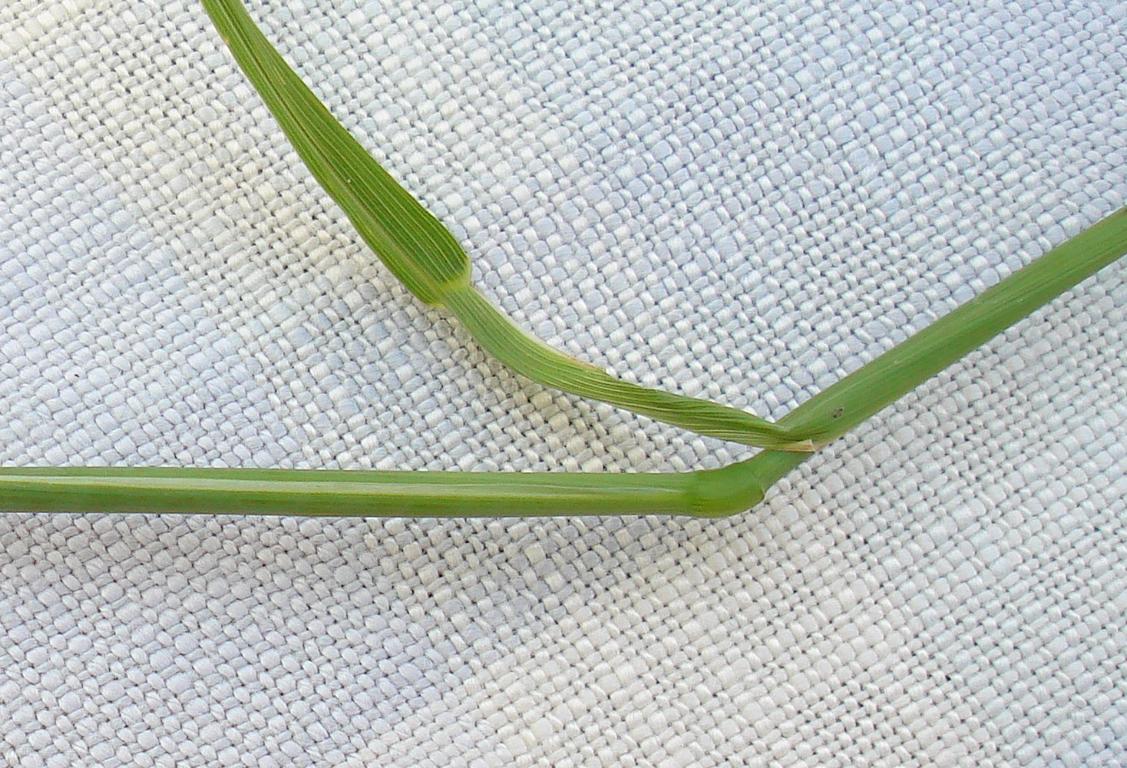
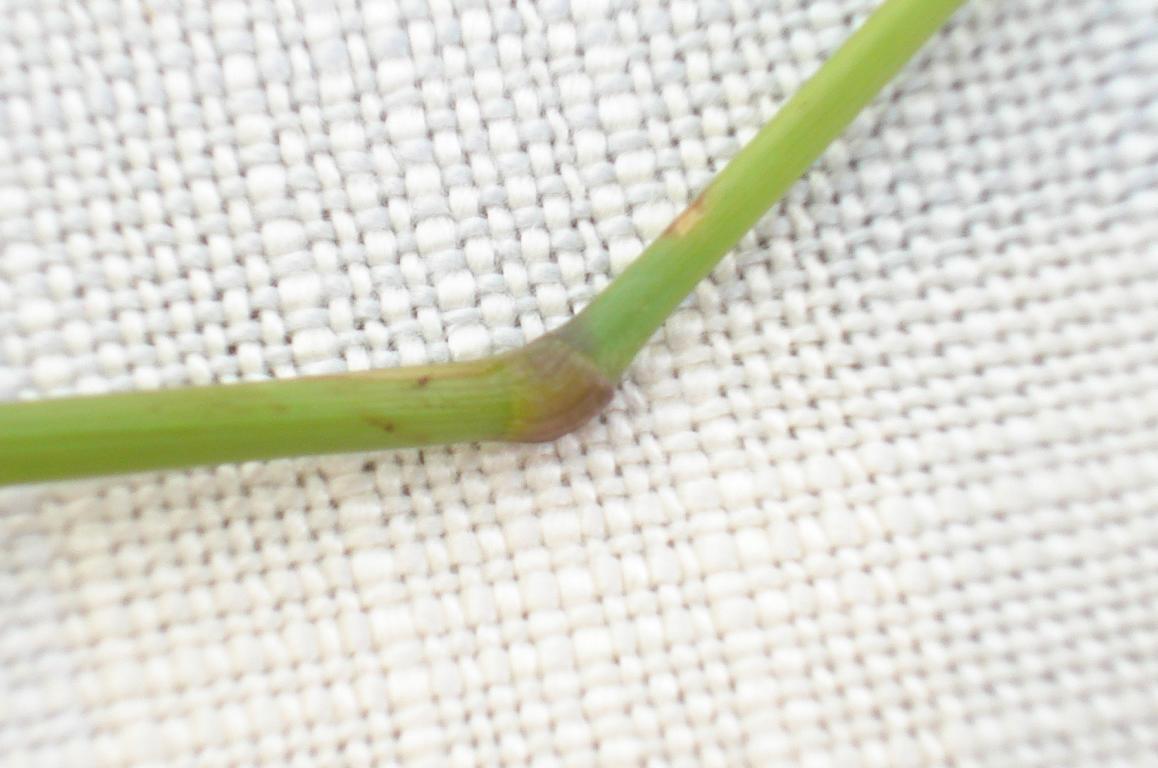
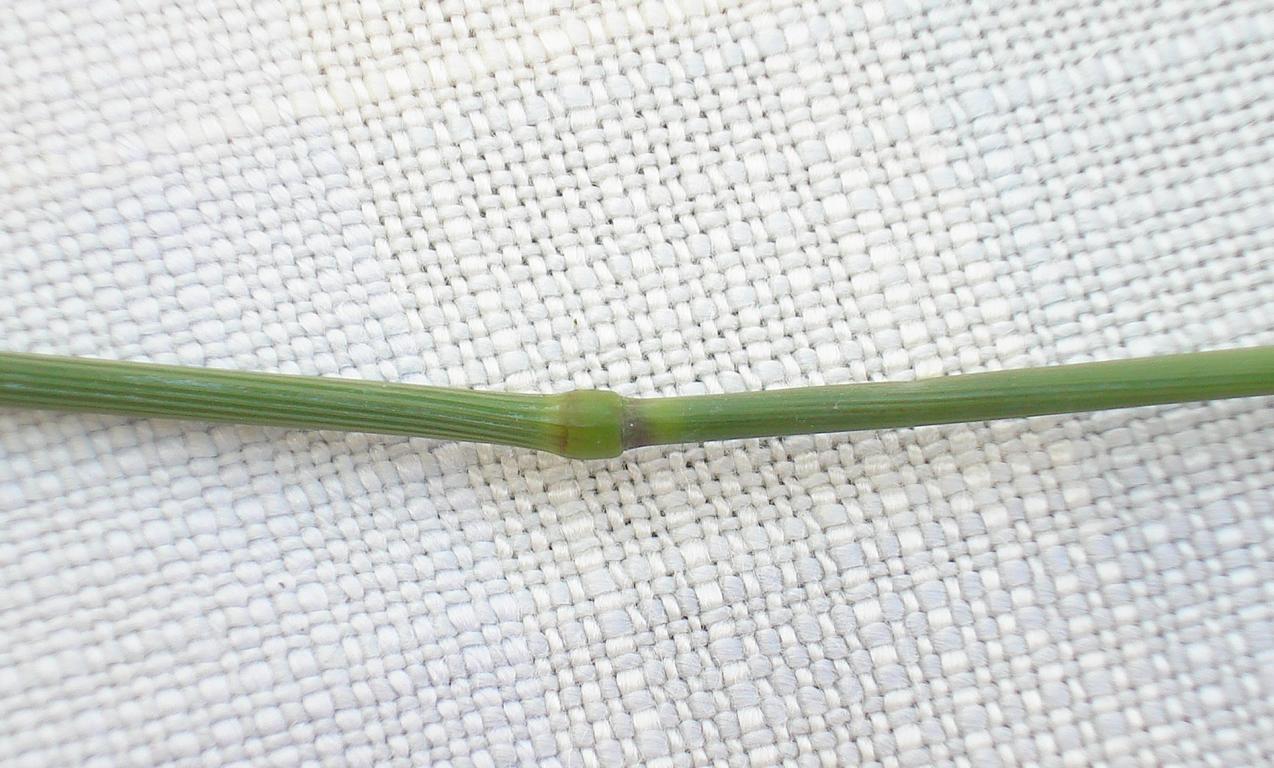
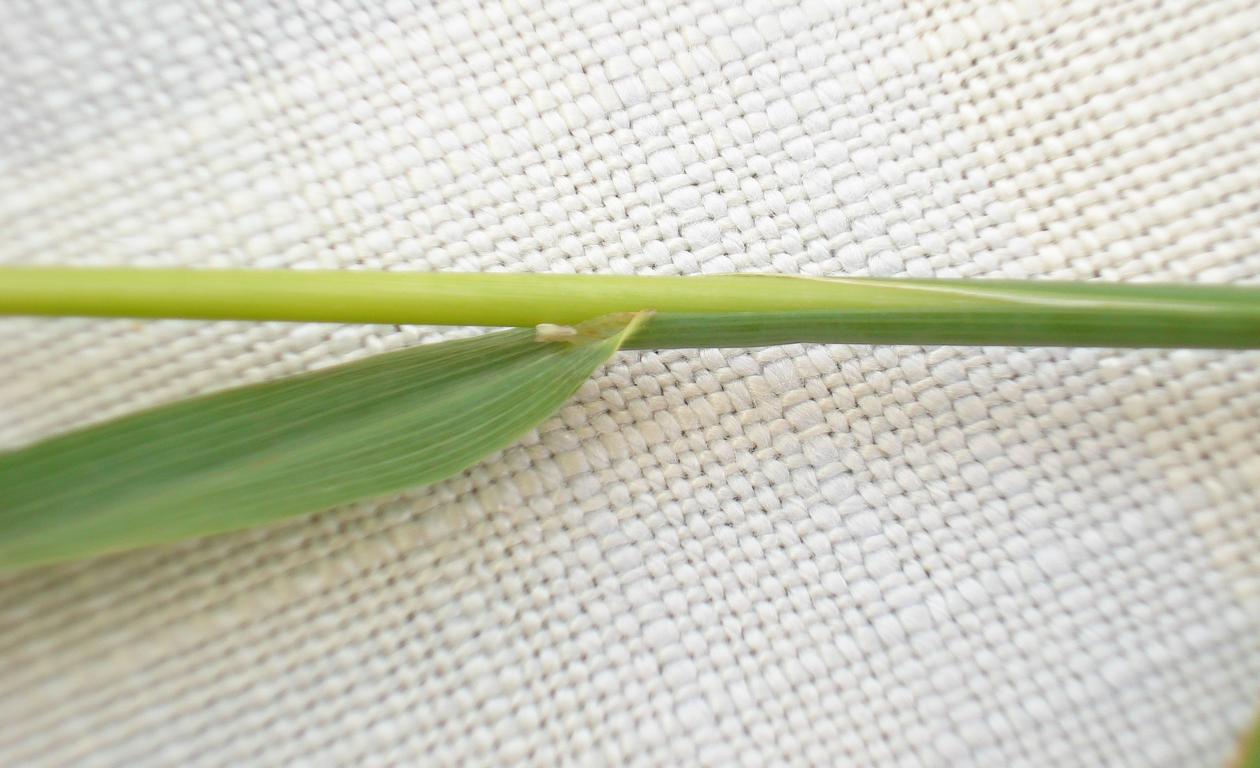
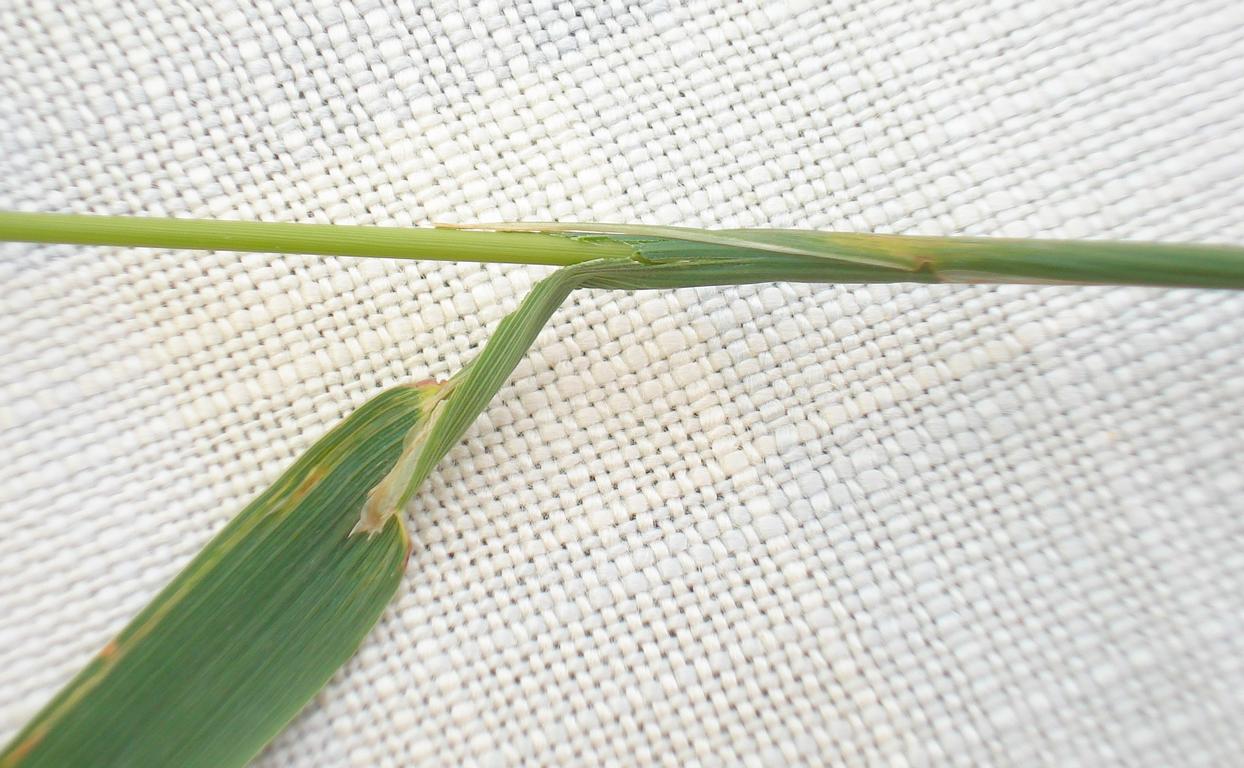
of the sweet grass:
1. The grass has "cartilage"
above the approach of the leaf.
2 The leaf surrounds the stem
- you can see it, when you slightly
pull the leaf away from the
stalk- like seen in the photo
in the middle. 3 The grass is
sharp, if you sweep it from
bottom to top..
|
|
|
Sweet
Grass-types
|
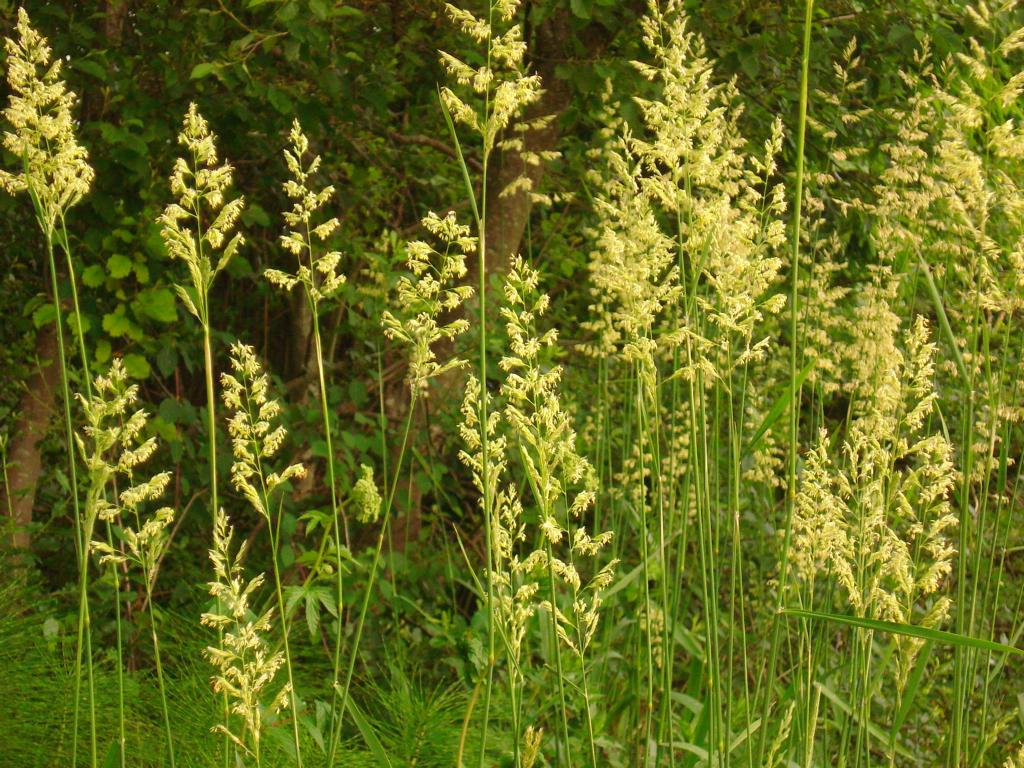
| Cocksfoot
- Scirpus |
|
Cocksfoot
Fotos:
Regina F. Rau |
|
|
|
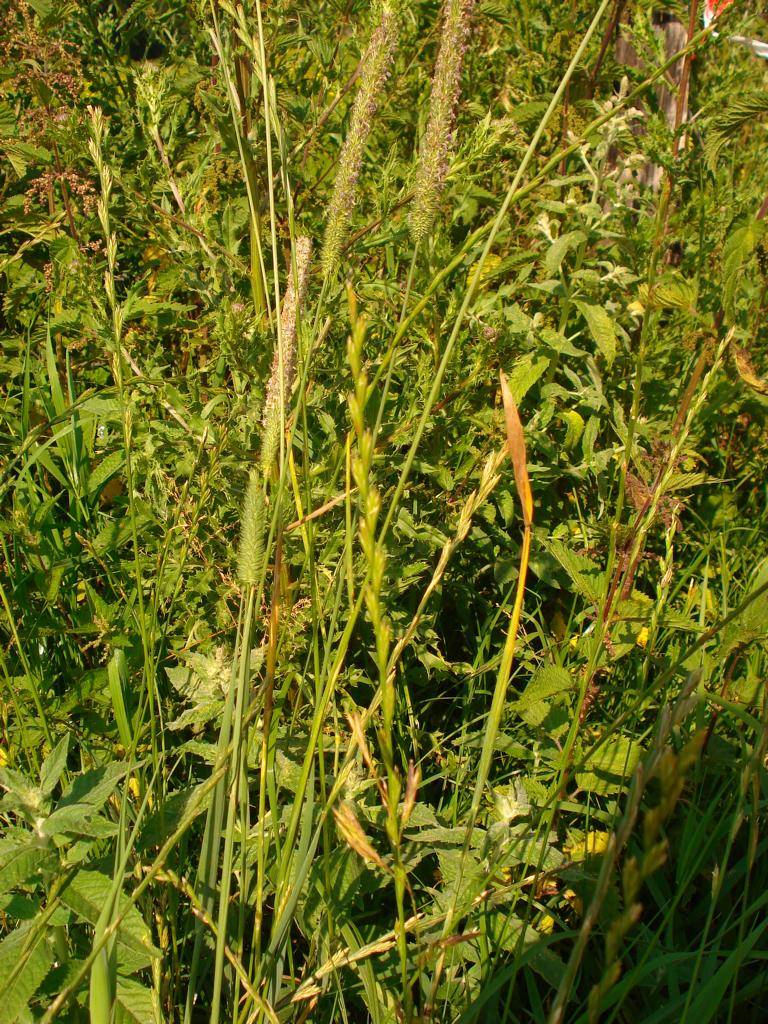
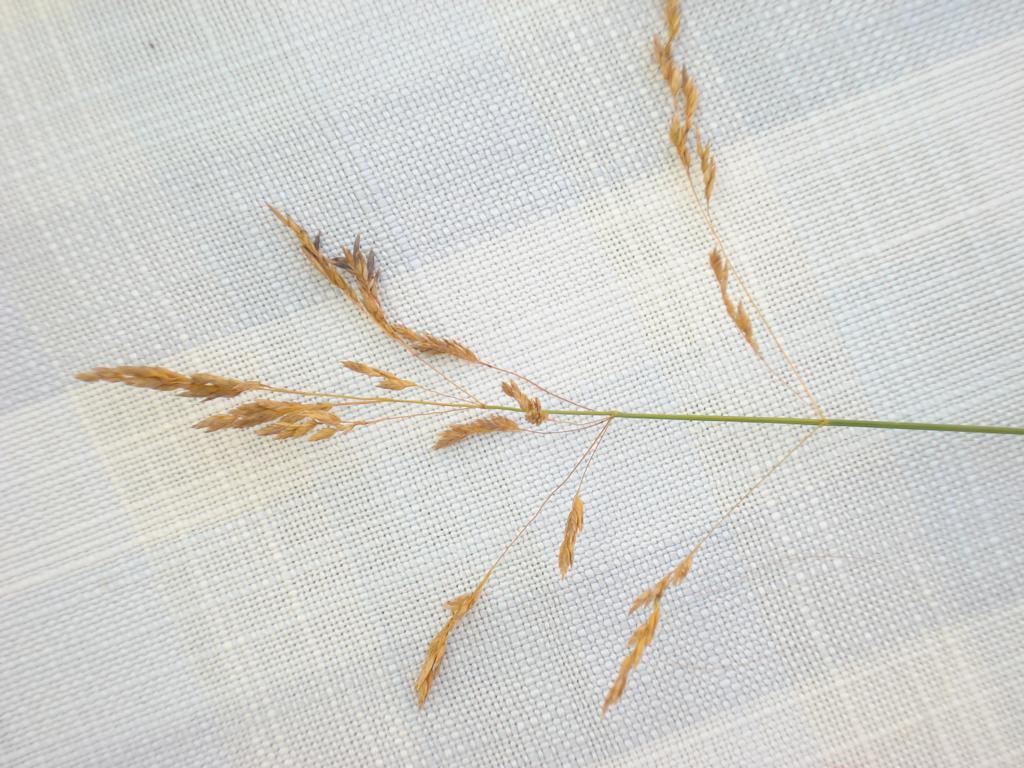
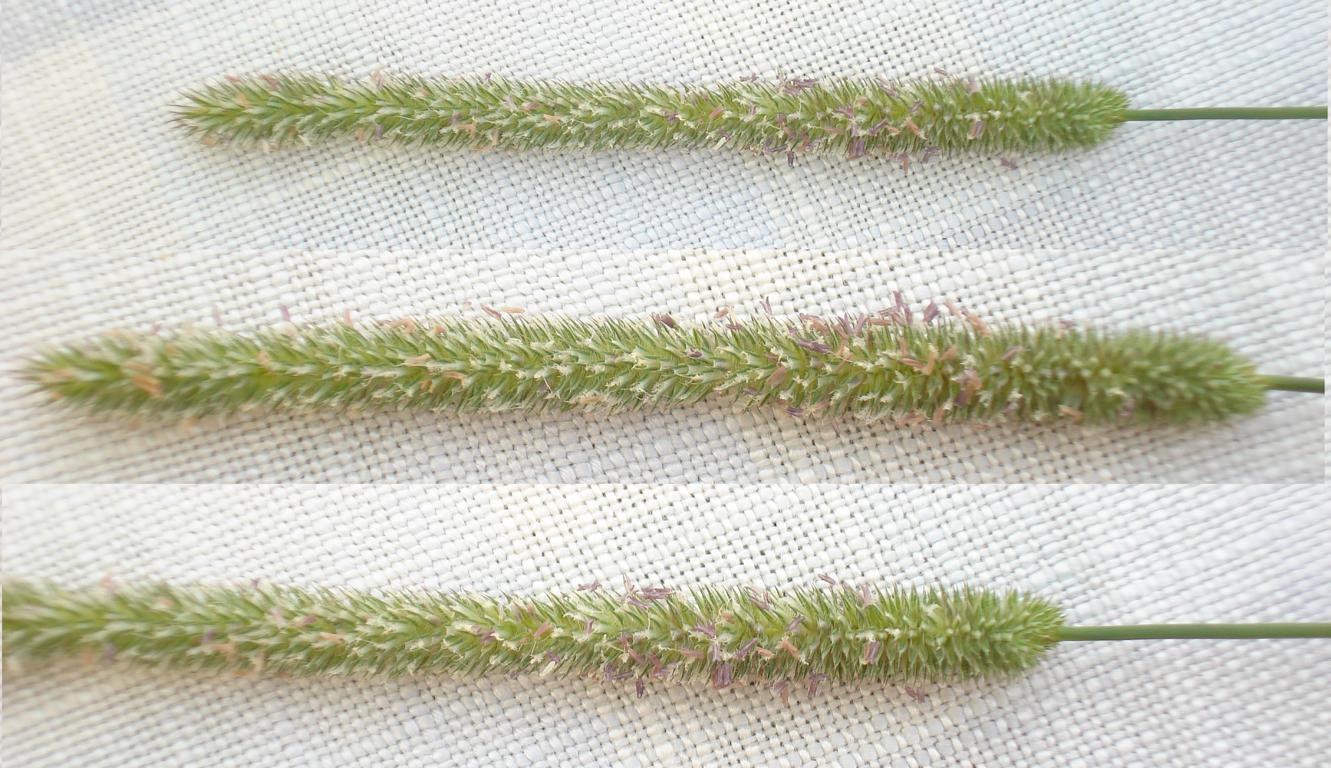
The
ordinary orchard grass is a gray-green
colored, strong, growing in clumps,
perennial (growing several years),
wild growing (herbaceous) plant. It's
stature reaches heights of up to 120
centimeters.
Description:
Its foliage leaves are 4-10
mm wide, with the top leaf standing
upright.
The
panicle is narrow, both before
and after the heyday, otherwise often
fanned out wide and forms a triangular
outline. It is - in contrast to the
forest-orchard grass - strongly balled,
with a wide extending lower branch,
which is contracted later and with an
upright peak.
The
spikelets are three-to five-flowered.
The glume is massive, not translucent,
green colored, reddish, rarely purple.
The lower glume is with one vein. The
keel of the upper glume and the lemma
is covered with long and short stiff
hairs. The lemma is occupied mostly
over the entire surface with long hairs,
and clearly narrowed on the lower flowers
in a one to two millimeters long awn.
|
| |
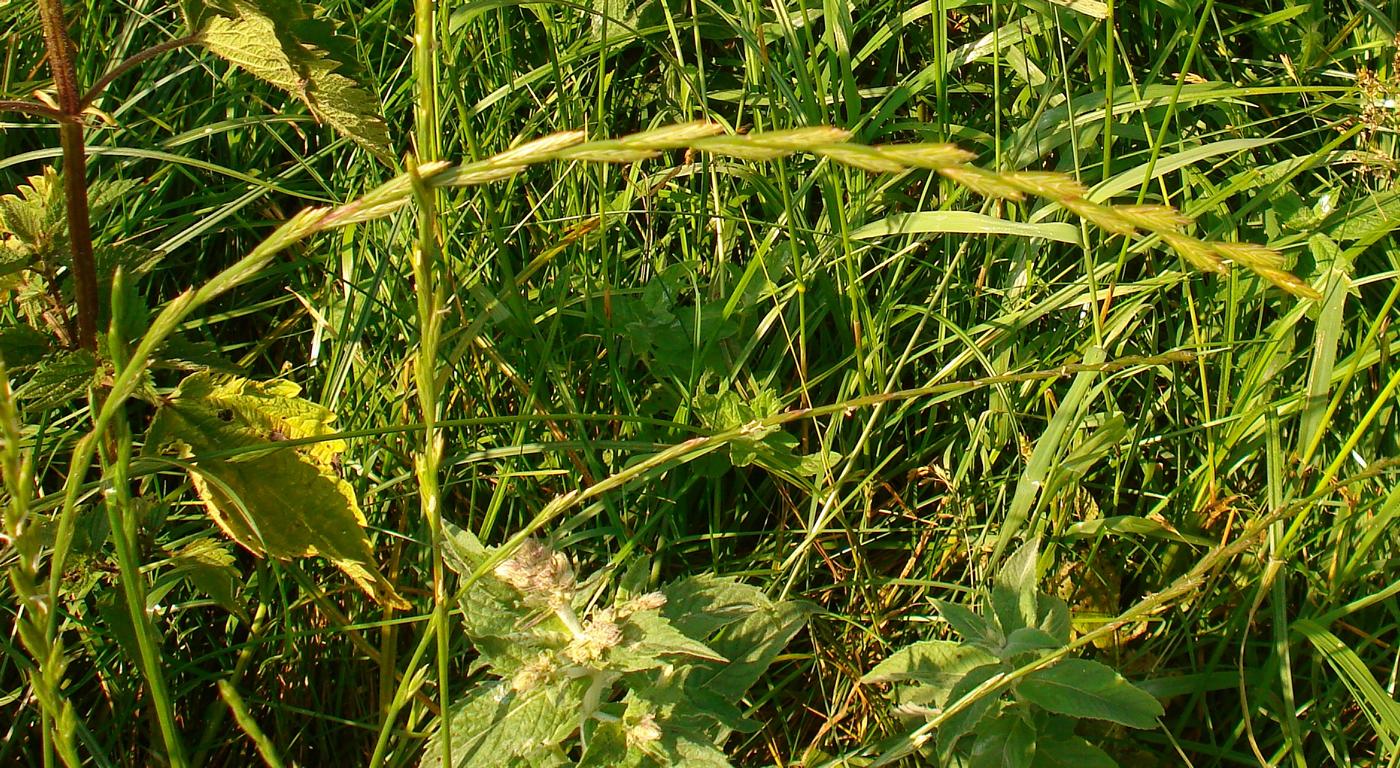
| Rye
Brome - Bromus
secalinus |
|
|
|
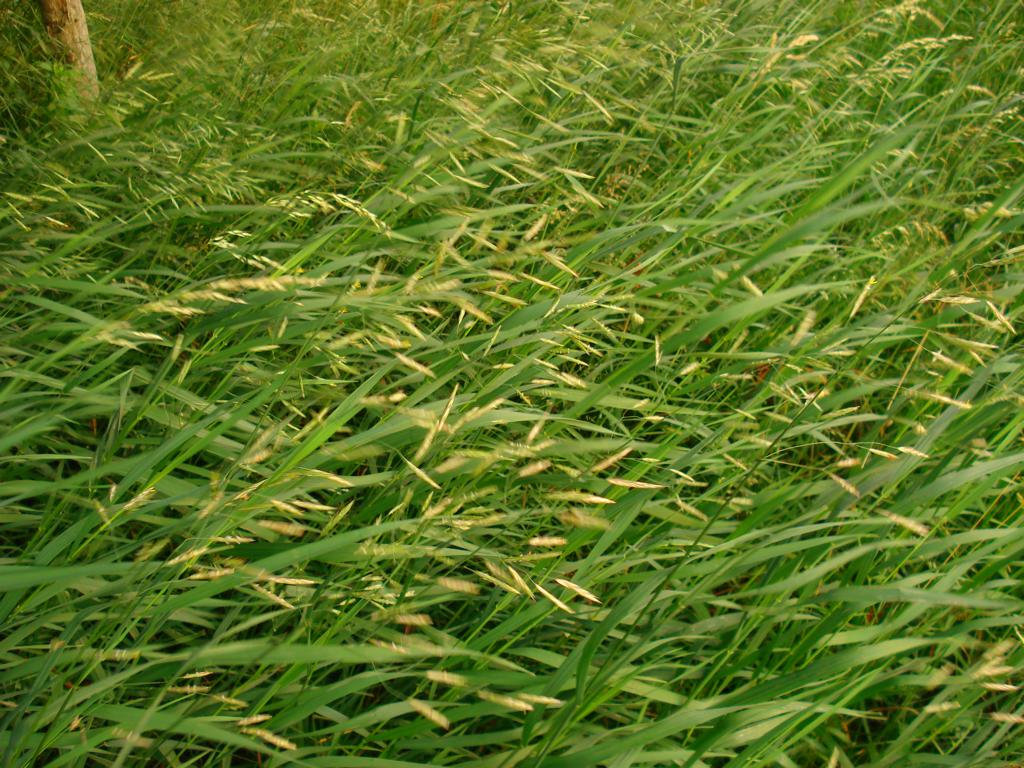
The
one-year old grass has 20 to 40 inches
tall stems, which are in contrast to
the hairy leaves bald like the leaf
sheaths. The upright and spreading panicle
is later nodding. The strikingly large,
15 to 25 mm long spikelets are 4-7 flowered
and yellow-green. The awns are only
half as long as the lemmas. After the
flowering period in June to September,
the mature spikelets are yellow, and
the husks spread apart from each other
by their edges roll around the grain.
Then, when the wind moves the plant,
spikelets rustle loudly (From Wikipedia).
|
| |
|
Blue green Cockspur - Setaria-Glauca |
|
|
|
The
plant is dull blue-green. The straw
is often branching at the bottom often
way branching and 4 to 16 inches high.
The corn panicle is compact, cylindrical
and about 1,2 inches long. Its branches
are usually flowered. The enveloping
bristles have a brownish yellow color.
The lemmas of the fertile flower are
strongly curved.
Also this species occurs on cultivated
sandy soil. From: J. Sturm's Flora of
Germany
|
| |
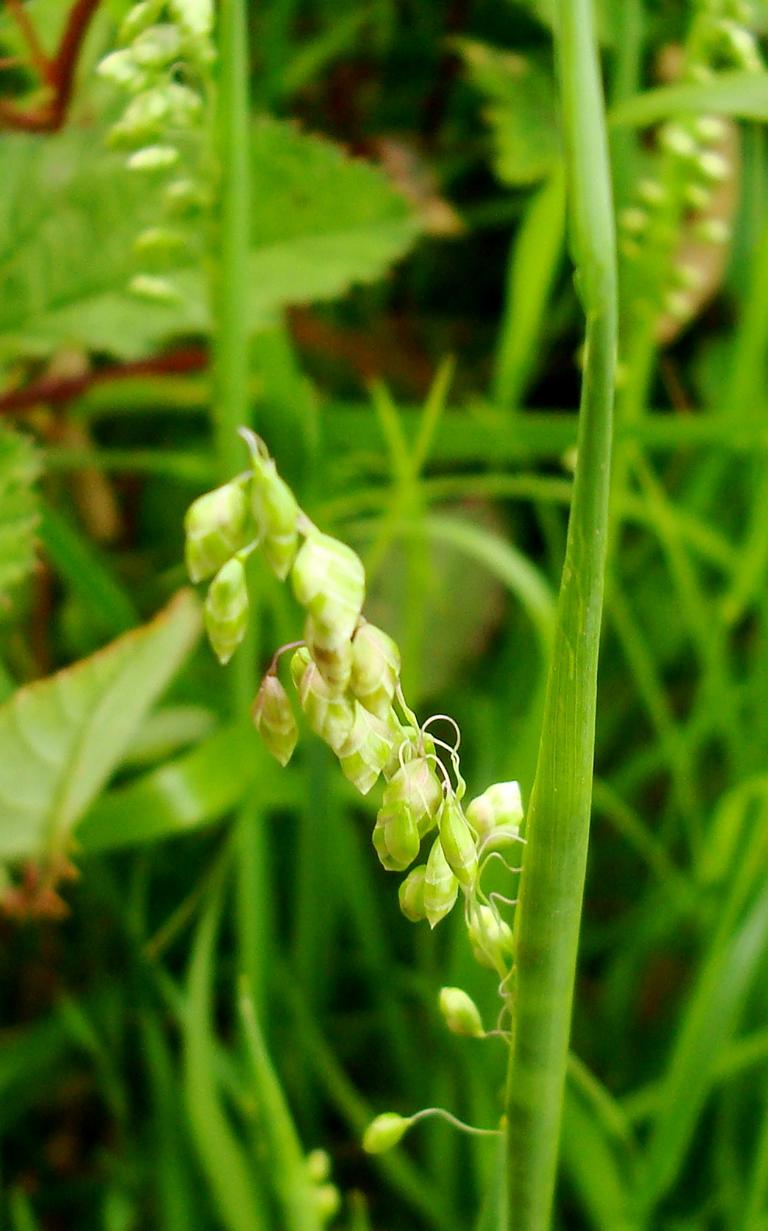
| Quaking
(medium) - Briza
Media |
|
Quaking
grass species belong to annual or perennial
herbaceous, the family of grasses (Poaceae).
They usually form clumps of different
size and dry off after flowering. It
is a grass of lean meadows and pastures
and is primarily characterized by its
heart-shaped spikelets and known as
an ornamental grass. The lower grass
is eagerly eaten by cattle as hay.
Description:
The leaf blades are flat and
linear to broadly linear.
The
spikelets stand on slender stalks in
open paniculate inflorescences.
Characteristic are the laterally flattened
to spherical spikelets. Their shapes
are ovoid to round, at the base often
heart-shaped. They consist of several
to many flowers. Since they are of relatively
thin stems, they often hang down and
tremble at the slightest wind movement.
This has earned their name of the genus.
In many species, the inflorescences
are so decorative that they are cultivated
as ornamentals.
The
glumes and lemmas stick
out horizontally. The three-to five
nerved and wide edged glumes are much
shorter than the spikelets and slim
ovated to roundish. The lemmas - roundish
to ovate - usually rounded at the top
and often heart-shaped at the bottom
overlap closely. They are five to eleven
nerved and usually clearly hollow, often
slightly keeled. The palea are slightly
smaller than the lemmas and lanceolate
to roundish, their keel is slightly
winged.zettlich bis rundlich.
Ihr Kiel ist leicht geflügelt.
|
| |
| Rush
- Scirpus |
| |
|
|
 |
|
 |
|
|
|
|
| |
|
|
Rush |
|
Rush |
|
|
|
|
|
Die
Scirpus-Arten wachsen als ausdauernde
krautige Pflanzen, die je nach Art Wuchshöhen
von 30 bis 200 cm erreichen. Einige
Arten bilden Rhizome aus. Die Halme
stehen einzeln bis vielen zusammen.
Beschreibung:
Die
Halme sind meist dreikantig und
die Blätter sind meist dreizeilig
angeordnet. Die Laubblätter
stehen in grundständigen Rosetten
zusammen oder sind am Halm verteilt.
Die Form der Blätter ist grasartig.
Die Blattspreiten weisen je nach Art
eine Länge von 11 bis 80 cm und
eine Breite von 0,3 bis 2,3 cm auf.
Es sind meist Blatthäutchen (Ligulae)
vorhanden.
Die
meist endständigen, manchmal in
ein bis drei Blattachseln seitlich stehenden,
meist verzweigten Blütenstände
sind fast doldig, korymbos bis rispig.
Sie enthalten 50 bis 500 Ährchen,
mit meist drei blattähnlichen Hochblättern.
Der Durchmesser der Ährchen ist
meist kleiner als 3,5 (bis 5) mm mit
10 bis 50, spiralig angeordneten Schuppen.
Die unteren Tragblätter sind größer
oder gleich groß als die oberen.
Über jedem unbehaarten schuppenförmigen
Deckblatt befindet sich eine Blüte.
Die Blüten sind zwittrig.
Die Blütenhülle besteht aus
meist drei bis sechs Borsten oder fehlt
selten. Die Borsten sind gerade oder
stark gedreht, glatt, verschieden gezähnt
oder bärtig, fein rückwärts
behaart, oder rau. Es sind ein bis drei
Staubblätter vorhanden. Der Griffel
ist selten zwei-, meist dreiästig.
Die
dreikantigen, bikonvexen oder plano-konvexen
Achänen sind 0,6 bis 1,8
mm groß und flaumig behaart. Die
Borsten umgeben auch noch die reifen
Achänen und können kürzer
oder viel länger als diese sein;
sie dienen der Verbreitung der Achänen.
|
| |
| Binse
- Juncus |
|
|
|
Die
Binsen (in Deutschland und teilweise
der Schweiz und Liechtenstein übliche
Bezeichnung) bzw. Simsen (in Österreich
übliche Bezeichnung) (Juncus) sind
die namengebende Gattung der Binsengewächse
bzw. Simsengewächse (Juncaceae),
die mit weltweit etwa 300 Arten, in
Deutschland 29 Arten, verbreitet ist.
Kennzeichnendes Merkmal dieser ausdauernden
Gräser sind die starren, rundlichen
und borstig zugespitzten Blattspreiten.
Diese sind meist hohl oder mit einem
schwammartigen, sogenannten Sternparenchym
(Durchlüftungsgewebe, Aerenchym)
erfüllt, welches der Versorgung
mit Sauerstoff dient.
Inhaltsverzeichnis
Beschreibung:
Die
stängelähnlich rundlichen,
seltener abgeflachten Blattspreiten
sind in der Regel unbehaart - im Gegensatz
zu den ebenfalls zu den Binsengewächsen
gehörenden Hainsimsen (Luzula).
Diese setzen den Stängel oft in
gerader Linie fort, so dass dann der
Blütenstand seitenständig
erscheint. Stängel und Blätter
sind mit einem schwammartigen, weißen
Mark gefüllt oder hohl und dann
nur etagenweise durch Markschichten
quer gegliedert. Die Blattscheiden sind
offen, geschlitzt und oben oft geöhrt.
Der
Blütenstand der Binsengewächse
ist eine Spirre, eine abgewandelte Form
der Rispe. Die randlichen beziehungsweise
unteren Blüten sind am längsten
gestielt, die zentralen oder oberen
stehen dagegen gestauchter. Auf diese
Weise entsteht ein fast trichterförmiges
Gebilde. Mehrere Blüten können
zusätzlich knäuelig zusammengefasst
sein. Die einhäusigen Blüten
der Binsen sind klein und im Grundaufbau
ähnlich jenen der Liliengewächse.
Die Blütenorgane - sechs Blütenhüllblätter
(Tepalen), sechs Staubblätter (Stamen)
und drei Fruchtblätter (Karpellen)
- sind regelmäßig und meist
vollständig ausgebildet. Die Blütenhüllblätter
(Perigon) sind zu spelzenartigen Schuppen
umgewandelt. Sie sind grün bis
braun, purpurn oder schwarz gefärbt,
zuweilen auch transparent. Die Fruchtknoten
sind immer oberständig und enden
in drei relativ langen, papillösen,
oft eingedrehten Narbenästen. Die
Zahl der Staubblätter ist selten
auf drei reduziert. Die Pollenkörner
sind immer in Viererpaketen zusammengefasst.
Der Fruchttyp der Binsen ist eine mehrsamige
Kapsel. Sie ist durch innere Rippen
(Plazenten) dreiteilig gegliedert.
Binsen
sind oft wintergrün. Ihre vegetative
Vermehrung erfolgt in der Mehrzahl über
Ausläufer (Rhizome). Etliche Arten
sind horstwüchsig..
|
| |
| Segge
- Carex |
 |
|
-b_o.jpg) |
|
-b_o.jpg) |
|
|
| Morgenstern-Segge
(Carex grayi) |
|
Leisten-Segge
(Carex binervis) |
|
Segge |
|
Segge |
|
|
Seggen
(Carex) sind eine Gattung aus der Familie
der Sauergrasgewächse (Cyperaceae)
mit bis zu etwa 2000 Arten,
die meist in kalten und klimatisch gemäßigten
Zonen vorkommen. Seggen sind ausdauernde,
krautige Pflanzen.
Die
Halme sind meist dreikantig, nur
selten stängelrund. Bei den meisten
Arten sind die einzigen oberirdischen
Sprossachsen die Achsen der Blütenstände.
Die Blätter stehen an diesen grundständig
oder sind entlang der Achse angeordnet.
Vegetative Sprosse haben meist nur grundständige
Blätter, ihr oberirdischer Teil
besteht nur aus den sich überlappenden
Blattscheiden. Nur bei wenigen Arten
gibt es vegetative Sprosse mit einer
richtigen Sprossachse mit Knoten und
Internodien. Diese sind charakteristisch
für die Sektion Ovales, kommen
aber auch in der Sektion Holarrhenae
und Carex vor. Bei einigen Arten gibt
es neben den normalen, gestauchten Sprossen
auch solche, die sich zu langen Stolonen
entwickeln und so der vegetativen Vermehrung
dienen.
Die
Blätter sitzen am Grund und
am Halm, bei manchen Arten sind alle
grundständig. Ein Blatthäutchen
ist vorhanden. Die Blattspreite ist
flach, V- oder M-förmig im Querschnitt.
Selten ist die Spreite fädig, eingerollt
oder rundlich. Meist ist sie unter 20
mm breit. Ist sie flach, so hat sie
eine deutlich ausgeprägte Mittelrippe.
Die Blattscheide sind bei den einzelnen
Arten von diagnostischer Bedeutung:
wichtig ist hierbei, ob sie beim Aufreißen,
bedingt durch Wachstum, lappig zerfetzen
oder netzartig zerfasern. Auch die Farbe
der Blattscheiden ist von Bedeutung.
Die
Blütenstände stehen endständig.
Sie bestehen aus Ährchen, die in
Ähren stehen, die wiederum in Ähren,
Trauben oder Rispen zusammengefasst
sind. Die Tragblätter der Ähren
sind laubblatt- oder schuppenartig.
Die Tragblätter der Ährchen
sind schuppenartig und nur sehr selten
laubblattartig. Die Ährchen bestehen
aus einer Blüte und haben keine
oder eine Schuppe. Die Blüten sind
eingeschlechtig: männliche Blüten
haben keine Schuppe; weibliche Blüten
haben eine Schuppe mit verwachsenen
Rändern, die als Perigynium die
Blüte umschließt und nur
an der Spitze offen ist. Eine Blütenhülle
ist nicht vorhanden. Die männlichen
Blüten haben ein bis drei Staubblätter.
In der weiblichen Blüte sind die
Griffel entweder abfallend oder unterschiedlich
lange an der Frucht verbleibend. Sie
sind gerade und zwei- bis dreifach gelappt.
Die
Früchte sind Achänen.
Ihre Form ist bikonvex, plankonvex oder
dreikantig, selten vierkantig.. Die
Achäne (altgr. a chainein ,nicht
klaffen') ist, als Sonderform der Nussfrucht,
eine einsamige Schließfrucht.
|
| |
| Chives
(Leek Bulrush) - Schoenoprasum |
|
Interesting:
'' schoenoprasum'' is composed of the
Greek words'' schoinos'' ='' Rush and
prason'' = leek and refers to the shape
of the leaves ...
|
| |
|
|
|
|
|
|
Ingredients and Effect
of Sweetgrass
|
|
|
The
ingredients in sweet grass all act synergistically.
That means, that only their combination causes
a higher effect than the sum of its individual
components. The ingredients produce a natural
food, that is tasty, first - and second: healthy.
It promotes the prodection
systems in order to cope with
free radicals.
Specifically, the materials contained in sweetgrass
have the following effect:
|
| |
|
Chlorophyll
|
| (SOD),
Chlorophyll, |
| |
|
Minerals
and Trace Elements
|
| Calcium
|
o |
Decisive
for the development of bones, teeth, and collagen
fibers. A long-term calcium deficiency causes
the body satisfies its need for calcium from
the depots from the bones - the result is
osteoporosis.
|
| Chrome |
|
Is
needed for the sugar and starch metabolism
and for the breakdown of fatty acids.
|
| Iron |
|
Part
of the blood pigment - it binds the oxygen
in the blood.
|
| Iodine
|
|
Very
important trace element for the thyroid gland. |
| Copper |
|
Important
for blood and bone formation. Copper is significantly
involved in the metabolism of the cell and
is essential for the function of the muscle.
Copper is responsible for the transferring
of the nerve signals to the muscles. It also
helps the cells to secure their water content.
Copper is present in some enzymes.
|
| Magnesium |
|
Is
required for the formation of bones and muscles,
and is an integral part of many enzymes.
|
| Molybdenum
|
|
A
vital trace element. Molybdenum is a nutrient
for eating- and killer cells to destroy invaders.
Also important for the reproduction. |
| Phosphorus
|
|
Acts
similar to calcium with the formation of bones
and teeth. It is involved to a large extent
on the extraction and utilization of energy
in the body.
|
| Sulfur |
|
Has
a strong detoxifying function - which is why
it is usually called "MSM" known
= "methyl-sulfonyl-methane".
|
| Selenium |
|
Through
a balanced combination with other recyclables,
selenium is more effective in the composite,
making it more bioavailable.
|
| Zinc |
|
Required
for cell division - important for the growth
and renewal of cells (including hair).
Zinc activates various enzymes.
|
| |
|
|
| |
|
Enzymes
|
|
More
than 20 enzymes have been detected in the
sweet grass. Enzymes are needed to cleave
food components and to make them usable in
the bloodstream. Ffor example, the enzymes
cozymase, diaphorase or cytochrome oxidase
were found in sweet grass..
|
| |
|
|
| |
|
Amino
Acids
|
|
Leucine,
Isoleucine
und Valine
are essential amino acids, that at the same
time and in sufficient quantity must be present
so that muscles can be built up. These three
together make up about a third of the muscles
and are therefore particularly important.
Leucine has the greatest oxidation rate. Leucine
stimulates protein synthesis and is therefore
supplied separately, as it is to promote physical
performance. Other amino acids in sweet grass:
|
| alanine |
|
alpha-amino
butric acid |
o |
arginine |
o |
aspartic
acid |
o |
cystine |
| glutamine |
|
glycine
histidine |
|
hydroxyproline |
|
methionine |
|
phenylalanine |
| tryptophan |
|
proline |
|
rutin |
|
serine |
|
threonine |
| |
|
|
| |
|
Unsaturated
Fatty Acids
|
|
linoleic
acid
|
linolenic
acid
|
arachidonic
acid
|
|
| |
| |
|
Vitamins
|
|
The
sweet grass is so rich in natural vitamins,
that it is able to cover a wide range of needs
of the human organism. Vitamins are comparable
to "catalysts" that support the
"Fabric Switch" optimal with antioxidants,
by interrupting chain reactions of "free
radicals" by emitting electrons without
being transformed itself into reactive molecules.
|
| Vitamin
A (Retinol) |
|
The
natural vitamin A
from the sweet grass is very important for maintaining
healthy eyes, skin and hair, mucous membranes,
gums and teeth. |
| Vitamin
B1 (Thiamine) |
|
Vitamin
B 1 (thiamine) helps in optimum energy extraction
from carbohydrates
|
| Vitamin
B2 (Riboflavin) |
|
Vitamin
B 2 (riboflavin) ensures optimum nutrient
utilization from protein, fat, sugars and
starches
|
| Vitamin
B3 (Niacinamide) |
|
The
body requires vitamin B3 (niacinamide), for
the recovery of energy from sugars, starches,
fats and proteins. Moreover, it is involved
in the formation of neurotransmitters in the
brain. Nicotinamide is responsible for the
energy conversion in the cells and for the
skin.
|
| Vitamin
B5 (Pantothenol) |
|
Vitamin
B5, (pantothenol) influences the metabolism
of fats, sugars, starches, proteins, as well
as the formation of fatty acids.
|
| Vitamin
B6 (Pyridoxine) |
|
Vitamin
B 6 (pyridoxine) plays a crucial role in the
metabolism of amino acids and is critically
involved in the construction of proteins.
|
| Vitamin
B8 (Folic acid) |
|
Is
very important for the cell structure. |
| Vitamin
B12 |
|
Vitamin
B12 is the king of vitamins. No other vitamin
affects that strong impact on the physical,
mental and emotional well-being of the humans.
It is not compareable with other vitamins.
The most important tasks of vitamin B12 are
found in the area of the nervous system, metabolism,
blood formation and detoxification.
Vitamin
B12 occurs as cyanocobalamin, hydroxocobalamin
and methylcobalamin. It is called the "red
vitamin" because of its color. It contains
the element cobalt. Due to its complex
structure, a synthetic preparation of the
vitamin in the laboratory is not possible.
Specially bred strains of bacteria serve as
suppliers for vitamin supplements
Only
a few people might aware, that the organism
forms vitamin B12 itself, with the help of
microorganisms, which are located on the green
plants. So you should not wash wild herbs
and the vegetables from the garden. .
Who
still wants to wash his vegetables and wild
plants, perhaps should fill his depots with
an occasional tablet.
Two
preparations have helped me years ago when
I suffered a life-threatening vitamin B12
deficiency due to a serious cook food relapse.
The symptoms at that time were very strong,
pulling pain in the blood vessels, in spite
of a feeling that I had strength and vitality,
I was extreme fatigue - especially in the
eyes with a strong pulling feeling, lack of
concentration and extreme tiredness even though
I felt physically fit. I was given a vitamin
B12 injection by the doctor each day in my
backside. But a few days later the situation
went worse, because I even developed an injection
phobia and also no I recognized no recovery,
which could not be otherwise with the 100mg
Cobalamin/injection. When I got the tablets
from the Ayurvedic Raw Food Physician -
Dr. John Switzer from Feldafing (Lake
Starnberg) - (Company "Rocky Mountains")
- all my symptoms were gone within three days!
I also bought the tablets of "Puritan"
and had a similar success with it.
| For
the ones who wants to play it safe, I
recommend two B12 (cobalamin) supplements |
First
|
from
Rocky Mountain Phyto-Essentials
Rockymountainminerals.eu/de
"B12 Mikro-Cobalamin"
or to purchase at: Rosenapotheke
in München: Rosenstraße
6, 80331 München.
Telefon:089 23002700 (Opening times: at
thursday 08:30 till 20:00) Rosenapotheke.com
or |
| Second |
Puritan's
Pride from: www.puritan.com
"B-12
1500 mcgg" (100 Tablets). |
|
| Vitamin
C |
|
Natürliches
Vitamin C (eg nettles; oranges) is important
for the general physical well-being and essential
for the formation and maintenance of connective
tissue and bone and to increase iron availability. |
| Vitamin
D3 (Calciferol)
|
|
An important aspect for the development of
bones and teeth. It also regulates calcium
and phosphate balance.
|
| Vitamin
E (Tocopherol) |
|
The
natural vitamin E in the sweet grass helps
to build muscles and to improve the function
of the cells.
|
| Vitamin
H (Biotin) |
|
Vitamin
H is a component of many enzymes, and is very
important to the metabolism of sugars, starches,
fat and protein.
|
| Vitamin
K (Phyllochion) |
|
is
iresponsible for the formation of various proteins |
| Carotenoids
|
|
Carotenoids
are antioxidant, as vitamin A. Therefore,
they protect the metabolism against harmful
influences by "oxidation". Carotenoids
such as beta carotene, alpha carotene, lycopene,
lutein, zeaxanthin and cryptoaxanthine are
an important aspect for the development of
bones and teeth.
|
Vitamin
P
(Flavonoids) |
|
Flavonoids
are universally present in plants, and thus
also in the human diet. They are presented as
particularly antioxidant properties. A number
of flavonoid-containing plants are used medicinally. |
| |
|
|
|
 Deutsch
 English
 Türkçe
 Español
 Français
 Italiano
 Nederlands
 Polski
 Português
 Русский

 Glücks-Coaching Friedensbotschafterin
 brauchst Du die Zugangsdaten.
Die bekommst Du auf email-Anfrage von mir: regina.rau(at)gmx.net

 Deutsch
 English


b.JPG)
b.JPG)

b.JPG)
b.JPG)
b.JPG)
.JPG)

b.JPG)
.JPG)
.JPG)
c.JPG)
b.JPG)


.JPG)


b.JPG)

.JPG)



.JPG)

b.JPG)








.JPG)
.JPG)
.JPG)
.JPG)
.JPG)

c.JPG)


b.JPG)


